

Blog
What a House Can Teach You About Insurance Core Systems
Artificial Intelligence
All Lines of Business

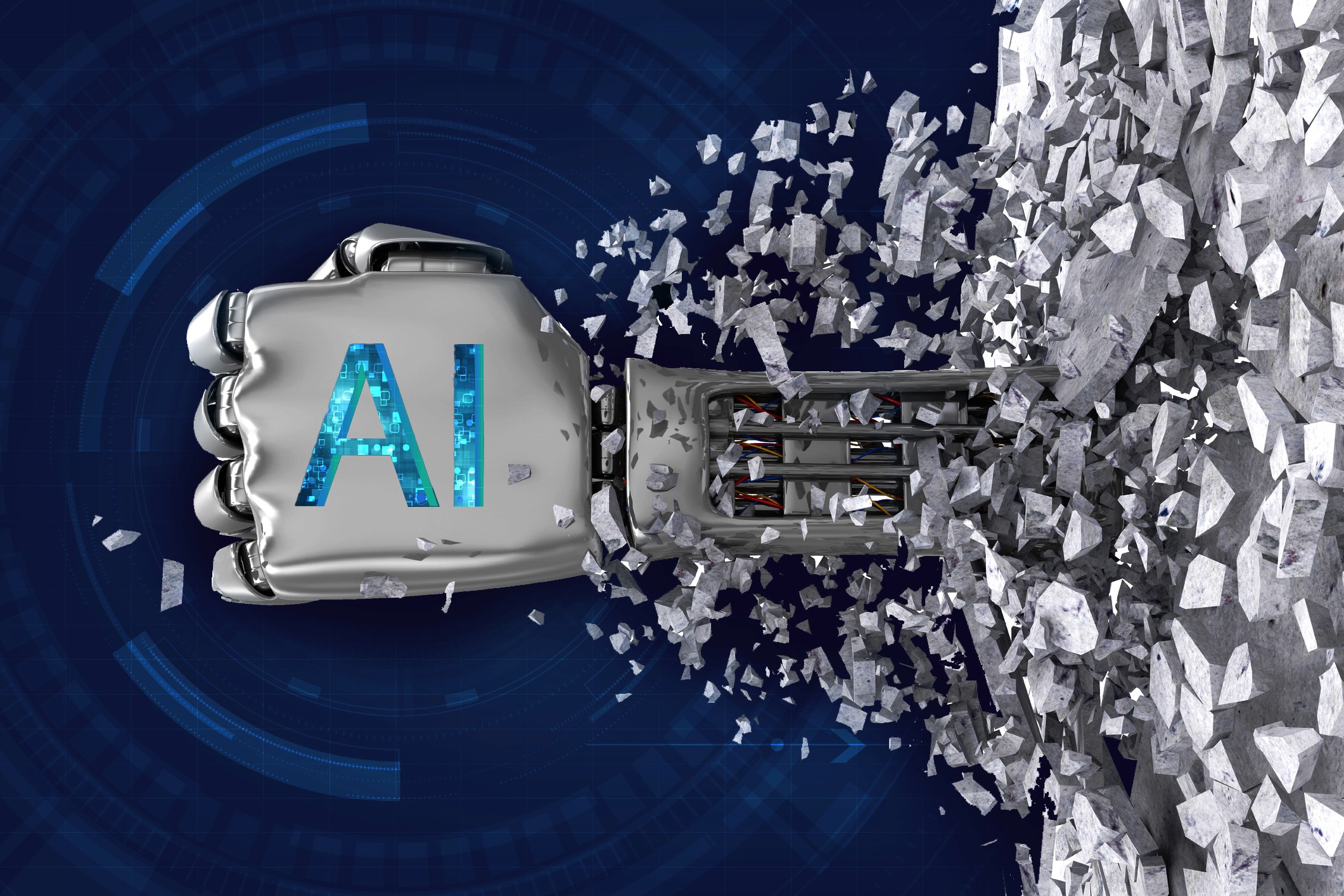
Over the recent weeks and months, I have had several discussions with clients, partners and my teams about the impact of agentic AI not just on our clients' businesses, but also ours. Some challenged SaaS applications—like Peak3's core insurance platform Graphene—are practically dead in the age of AI.
Many of these arguments can be tied back to a podcast interview with Satya Nadella, the CEO of Microsoft, back in December last year. In it, Nadella noted that "[business applications] are essentially CRUD [(Create, Read, Update, Delete)] databases with a bunch of business logic. The business logic is all going to these agents, and these agents are going to be multi repo CRUD, right? So they’re not going to discriminate between what the back end is."
The conclusion some have drawn from Nadella's off-the-cuff statements is that AI agents will absorb the business logic and functionality of SaaS applications and directly interact with databases, rendering existing SaaS applications obsolete or "dead".
I have been pondering about this during the past weeks and came to my own conclusion: The question is not what could happen in theory, but what is prudent and feasible in practice. Naturally, agentic AI will transform traditional SaaS—for example, how we interact with SaaS or how we build SaaS. But it will not render SaaS obsolete. While this applies generally, I want to deep dive further into the insurance core platform space.
I want to mention just a few dimensions that affirm my belief:
Insurance is a highly regulated industry. Insurance laws and regulations evolve cautiously. The web of regulations affecting insurers require not just correct behavior, but explainable behaviour, observable behaviour and mostly deterministic behaviour. Many LLM-based agents operate as black boxes. Even with quickly evolving techniques, true explainability remains elusive. Jumping from Cobol mainframe applications (as still in place today) to AI agents running an insurance business on top of databases in the foreseeable future takes a big leap of faith. Believing that regulators will sign off on it will take an even bigger leap of faith.
AI can reduce costs by automating tasks traditionally handled by structured systems and human workflows. However, this is not always the case. Ultimately, structured workflows win at scale: For high-volume, low-complexity transactions (e.g., billing, renewals), deterministic systems with clear business rules are vastly more efficient. Agentic AI excels in edge cases and complex orchestration tasks—think fraud detection, claims triage, or dynamic customer engagement. The traditional rule engine will maintain its role and will be dynamically enhanced with AI agents. In fact, AI will help create new rules over time.
Even as AI models continue an exponential trend to become more efficient (and there are certainly more "DeepSeek moments" to come), they cannot match the efficiency of simple business rules. The model will remain hybrid in the foreseeable future.
Insurance is a long-term promise—particularly in the life insurance space. Core platforms are built as systems of record for decades to come. A life insurance policy sold today needs to follow the same rules and calculations in half a century. Maintaining data integrity in a distributed, AI-driven process is inherently complex—or even impossible over several decades.
There's an abundance of other arguments—from security and compliance to trust and quality assurance—in favour of the longevity of the core platform. Not every single argument may convince sceptics, but the sum certainly should.It is yet unknown how AI will transform the insurance industry and the world at large. We can all just speculate. But I am sure that the agentic or AI-native insurers of the future will run on an evolution of today's core platforms.
We plan to share more about our vision of such an AI-native core platform in the future—stay posted.
So, yes—the insurance core system is dead. Long live the insurance core system!
Artificial Intelligence
All Lines of Business

Core System
All Lines of Business

Artificial Intelligence
All Lines of Business